
Living in Dubai
Opening a Bank Account in the UAE: The Expat's Complete Guide
Article Overview
Opening a bank account in the UAE is straightforward — once you know which documents you need, which account type makes sense for your situation, and what the fee structure actually looks like.
That last part trips up a lot of people. Banks here charge for things that are free in other markets: minimum balance shortfalls, international transfers, SMS notifications, card replacements. Reading the schedule of charges before opening saves real money every month.
This guide covers the full process: right bank, right account type, and understanding what you'll actually pay.
Key Highlights
- - Start with the official route before comparing advice. For uae banking guide expats, the useful planning range is AED 500 to AED 15,000 depending on the exact route, provider, documents, deadline, and area in Dubai or the wider UAE, so a vague estimate is not enough.
- - Keep screenshots, receipts, application numbers, and provider messages together. This reduces delays when you need follow-up or correction.
- - Check timing before price. A cheaper option that adds 10 working days can become expensive if it affects work, rent, school, travel, or visa status.
- - Compare the full monthly or total cost, not the advertised headline. Transport, typing, courier, parking, medical, insurance, or rework fees can change the real number.
Editorial Note
This guide is written by Abdul Karim for Dubai Trending readers and is reviewed for clarity, practical usefulness, and source awareness before publication. Time-sensitive details should still be confirmed with official UAE channels.
Last reviewed: May 2026 | Intended readers: new residents, families, and professionals planning everyday life in Dubai
The Situation In Plain English
When I looked at how readers handle opening a bank account in the uae, one observation kept coming back: the people who struggled most were not careless, they were simply working with incomplete local information. This guide explains the practical UAE details behind Opening a Bank Account in the UAE: The Expat's Complete Guide, including realistic costs, timelines, documents, official checks, and the decisions that affect residents in Deira, Bur Dubai, JVC, Dubai Marina, Downtown, and Al Nahda. The article is designed for people who need to decide what to do next, whether they are moving to Dubai, already living in the UAE, changing jobs, handling documents, planning family life, or managing money. It matters because a vague online summary can cost you money in Dubai, while a specific plan can protect AED 25 to AED 150 in fees, AED 3,000 to AED 5,000 minimum balance rules, and transfer margins that matter every month before the mistake happens. You will see specific AED amounts, timelines, area names, official-source checks, common mistakes, and answers to questions people actually search before taking action.

First Checks
- The first thing to understand is that Dubai processes are usually manageable when you follow the correct sequence. You should identify the authority involved, the document needed, the fee range, and the realistic waiting time before you make a payment or commitment. For opening a bank account in the uae, the practical number to keep in mind is AED 25 to AED 150 in fees, AED 3,000 to AED 5,000 minimum balance rules, and transfer margins that matter every month. This is why I always suggest checking official portals before relying on a social media answer or a friend's old experience.
- The second layer is location and timing. A resident in Deira, Bur Dubai, JVC, Dubai Marina, Downtown, and Al Nahda may face different commute times, service centres, school routes, bank branches, or appointment availability. Dubai can make a simple task feel hard when you try to do it during peak hours or after a deadline has already passed. Build a calendar reminder at least 30 days before any renewal, contract decision, application, or payment date.
- The third layer is proof. Keep screenshots, receipts, application numbers, contract copies, salary letters, Emirates ID scans, passport copies, and email confirmations in a single folder. A missing receipt or unclear document can delay a process by 3 to 10 working days. Good records are not paperwork for the sake of paperwork; they are what make the next step easier.

Planning Numbers
For planning, use conservative numbers. Government-linked steps can be as low as AED 20 to AED 220 for small registrations, while larger residency, licence, insurance, business, school, or employment processes can reach AED 2,000 to AED 15,000. Processing time can be same-day for a simple online check, 2 to 5 working days for routine approvals, and 2 to 4 weeks when medical tests, employer action, bank checks, or authority reviews are involved. If a paid agent promises everything instantly, ask which authority portal will show the application reference.
Area names also matter because the same decision feels different in different parts of the UAE. Someone living in Deira with metro access may solve a transport or document task faster than someone in a car-dependent community. A family in Mirdif or Arabian Ranches may care more about school routes and clinic networks than a single professional in JLT. A founder in a free zone may face different banking and visa steps than a mainland employee in Business Bay.
What this means practically is that you should write the numbers before taking action. Put expected fee, transport cost, waiting time, documents, and backup option on one page. If the total is above AED 1,000, get confirmation from the official source or provider before paying. If the timeline affects a job start, school admission, tenancy renewal, or travel date, add at least one extra week as a safety margin.
The part most guides skip is the cost of rework. A rejected application, wrong activity, missed renewal, unclear scan, or badly timed appointment can cost another AED 100 to AED 1,000 and several days. Even when there is no direct fine, the hidden cost is time away from work and the stress of chasing updates. That is why accuracy at the start is cheaper than speed at the start.

One Realistic Example

Mistake Checklist
| Mistake | Better move |
|---|---|
| Mistake 1: Starting before checking the official source creates wrong expectations. A 2023 fee screenshot can be outdated, and the difference may be AED 100 to AED 1,000. This happens because people often act from urgency instead of a checked plan. The better move is to pause for 10 minutes, verify the number or rule, and keep written proof before paying or committing. In the UAE, a decision that looks small can affect your monthly budget, your documents, and your timeline at the same time. | Verify the rule, save proof, and slow the decision down before money or documents move. |
| Mistake 2: Using the cheapest provider without checking scope often costs more. If typing, courier, medical, insurance, or amendment fees are excluded, the final bill changes quickly. This happens because people often act from urgency instead of a checked plan. The better move is to pause for 10 minutes, verify the number or rule, and keep written proof before paying or committing. In the UAE, a decision that looks small can affect your monthly budget, your documents, and your timeline at the same time. | Verify the rule, save proof, and slow the decision down before money or documents move. |
| Mistake 3: Waiting until the final week is risky. Renewals, job moves, school admissions, and banking checks can take 2 to 10 working days longer than expected. This happens because people often act from urgency instead of a checked plan. The better move is to pause for 10 minutes, verify the number or rule, and keep written proof before paying or committing. In the UAE, a decision that looks small can affect your monthly budget, your documents, and your timeline at the same time. | Verify the rule, save proof, and slow the decision down before money or documents move. |
| Mistake 4: Not saving receipts and reference numbers makes follow-up harder. Every official or provider conversation becomes slower when you cannot quote the application number. This happens because people often act from urgency instead of a checked plan. The better move is to pause for 10 minutes, verify the number or rule, and keep written proof before paying or committing. In the UAE, a decision that looks small can affect your monthly budget, your documents, and your timeline at the same time. | Verify the rule, save proof, and slow the decision down before money or documents move. |
Abdul Karim's Field Note
What I have noticed as Abdul Karim is that UAE residents become confident only after they stop treating each process as a one-time emergency. The people who manage opening a bank account in the uae well usually keep a simple folder, know which official website applies, and ask for written confirmation before paying. They do not always spend less because they are lucky; they spend less because they avoid rework. That habit matters more in Dubai than most newcomers expect.
Where To Verify
Check UAE Government Portal for current official guidance connected to Opening a Bank Account in the UAE: The Expat's Complete Guide. Confirm the latest fee, eligibility wording, service channel, and update date before making a payment. Save the link or screenshot with your records so you can return to the same source later.
Check Dubai Statistics Center for current official guidance connected to Opening a Bank Account in the UAE: The Expat's Complete Guide. Confirm the latest fee, eligibility wording, service channel, and update date before making a payment. Save the link or screenshot with your records so you can return to the same source later.
Detailed Practical Guide
The sections below add the extra context, checks, and reader-focused detail needed to make this guide useful beyond a quick summary.
Who This Guide Is For
Opening a Bank Account in the UAE: The Expat's Complete Guide is written for new residents, families, and professionals planning everyday life in Dubai. The aim is to help you understand the topic before you spend money, sign a contract, submit documents, or make a decision that affects your work, family, or daily routine in the UAE.
The guide focuses on budget, commute, housing comfort, and daily routine. Instead of giving a short headline answer, it explains the thinking process behind the decision so you can apply it to your own situation. That matters because two readers can face the same topic but need different choices depending on budget, location, employer, family status, and timing.
Quick Practical Answer
The short answer is this: do not treat living in dubai as a one-step decision. Start with prepare documents before your first bank visit, then compare the details against your real-life situation. A choice that looks simple online can become expensive or stressful when commute time, renewal dates, documentation, or hidden fees are included.
Start with the official route before comparing advice. For uae banking guide expats, the useful planning range is AED 500 to AED 15,000 depending on the exact route, provider, documents, deadline, and area in Dubai or the wider UAE, so a vague estimate is not enough. Use that idea as the starting point, but do not stop there. The useful version of this guide is not only what to do; it is how to check whether the advice is correct for you today. For anything involving rules, payments, or eligibility, verify the final detail through Dubai Government, UAE Government, RTA, and community service portals.
What To Check Before You Act
Before taking action, write down the facts that are specific to you. Useful facts include your budget, location, employer or sponsor situation, document expiry dates, family requirements, commute pattern, and how quickly you need the result. This simple list prevents you from following advice that was written for someone with a completely different situation.
Then compare those facts against the main checkpoints in this article: The Situation In Plain English, First Checks, Planning Numbers, One Realistic Example. If one of those checkpoints is unclear, pause before paying, applying, signing, or booking. Most costly mistakes happen when a reader skips the unclear part and hopes it will resolve itself later.
Realistic Example
Imagine a reader who finds a quick recommendation online and acts immediately. At first it seems efficient, but then a missing document, a longer commute, an extra fee, or a different eligibility rule changes the result. The original advice was not always wrong; it was incomplete because it did not account for the reader's exact situation.
A better approach is to use this guide as a working checklist. For example, review choose the right account type for your income pattern and read the fee schedule before signing anything before you commit. If the numbers, documents, or timing still make sense after that review, the decision is much stronger. If something does not match, you have caught the issue early enough to correct it.
Common Mistakes To Avoid
The biggest mistake is choosing based on a single online opinion instead of comparing the real monthly impact. Dubai and the wider UAE are practical places, but systems are rule-based. The small details matter: exact names on documents, correct account type, approved provider, service area, fee schedule, contract wording, and official eligibility route.
Another mistake is comparing only the headline number. A cheap option can become expensive after transport, time, renewal charges, missed work hours, rejected applications, or repeated follow-ups. A more expensive option can be better if it reduces risk and saves time. The right question is not only "what costs less today?" but "what creates the fewest problems over the next few months?"
Step-By-Step Decision Method
Step one is to confirm the basic requirement. Step two is to compare your options side by side. Step three is to verify the official or provider-specific rule. Step four is to keep a record of the decision, payment, confirmation, or communication. This method works because it turns a confusing topic into a controlled sequence.
For this specific guide, that sequence becomes: Prepare Documents Before Your First Bank Visit, Choose the Right Account Type for Your Income Pattern, Read the Fee Schedule Before Signing Anything, and Set Up International Transfers Through a Specialist Service. Follow it in order. If you jump straight to the final step, you may miss the condition that decides whether the action is valid, affordable, or useful for you.
Documents, Proof, And Records
Keep a simple folder for every important UAE process. Save PDFs, screenshots, receipts, reference numbers, email confirmations, chat transcripts, contract copies, and date-stamped notes. This is not over-preparation. It is what helps when a provider asks for proof or when you need to follow up after a delay.
If the topic involves money, employment, housing, government services, insurance, banking, or travel bookings, records become even more important. A clear file can save days of back-and-forth. It also protects you from relying on memory when the exact date, amount, reference number, or wording matters.
How To Verify Information
Always separate general guidance from official confirmation. This article explains the practical route, but final rules and fees can change. Before you make a payment or submit an application, check the relevant official source: Dubai Government, UAE Government, RTA, and community service portals. If a provider gives advice that conflicts with an official page, ask for clarification in writing.
For fast-changing topics, look for the latest update date, current fee table, and exact eligibility wording. Do not rely only on social media comments, old forum posts, or screenshots shared in messaging groups. They can be useful for personal experiences, but they should not be the final source for an important decision.
When To Ask For Help
Ask for help when the decision involves legal exposure, large payments, immigration status, family sponsorship, employment rights, medical coverage, taxation, or a binding contract. A small consultation fee can be cheaper than fixing a preventable mistake after it has already affected your record or budget.
Good help should be specific. Instead of asking "what should I do?", bring the exact facts: dates, amounts, document copies, screenshots, contract clauses, location, and what you have already tried. Specific questions get better answers and reduce the chance of someone giving you generic advice.
Final Reader Checklist
Before you finish, confirm five things: you understand the main requirement, you know the total cost, you have checked the current rule, you have saved the relevant documents, and you know the next step if something goes wrong. If all five are clear, you are much less likely to face avoidable delays or surprise costs.
This is the practical standard Dubai Trending uses for guides like this one. The goal is not to make every topic sound easy. The goal is to make it manageable, transparent, and useful enough that a reader can take the next step with more confidence and fewer assumptions.
Suggested Budget Split
| Category | Share | Notes |
|---|---|---|
| Expected direct cost | AED 500 to AED 15,000 depending on the exact route, provider, documents, deadline, and area in Dubai or the wider UAE | Use this as planning guidance and verify the current amount with the official source. |
| Time buffer | 2-10 working days | Allow extra time when documents, approvals, employers, banks, schools, or medical checks are involved. |
| Emergency buffer | AED 500-1,000 | Useful for rework, urgent typing, transport, courier, or corrected documents. |
| Record keeping | 0 AED | Save receipts and reference numbers because they are often the difference between fast and slow follow-up. |
Deep Action Plan
Action 1
Prepare Documents Before Your First Bank Visit
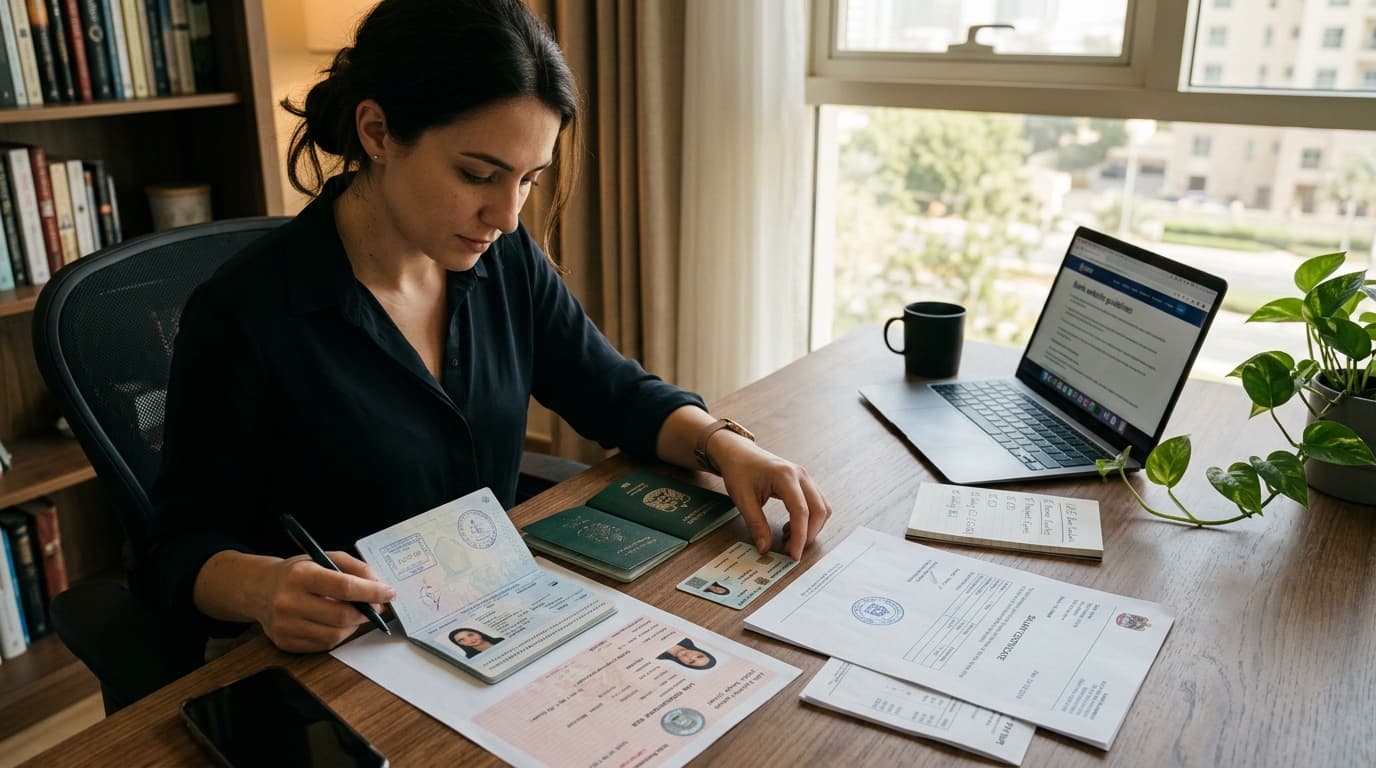
Valid residence visa, Emirates ID or proof of application, passport, and salary certificate. Having all four ready means your first visit can result in a completed application — not a return trip for missing documents. For living in dubai readers, treat this as a working checkpoint: write the exact cost, deadline, document, contact person, and backup option before moving ahead. If the answer is unclear, pause here rather than trying to fix the mistake later. This checkpoint matters most at position 1, because the next decision depends on it.
Action 2
Choose the Right Account Type for Your Income Pattern
Regular salary employees benefit from salary-designated accounts with automatic fee waivers. Freelancers and variable-income earners need accounts with manageable minimums that don't charge fees in low-income months. For living in dubai readers, treat this as a working checkpoint: write the exact cost, deadline, document, contact person, and backup option before moving ahead. If the answer is unclear, pause here rather than trying to fix the mistake later. This checkpoint matters most at position 2, because the next decision depends on it.

Action 3
Read the Fee Schedule Before Signing Anything
Request the schedule of charges before opening the account. Minimum balance fees, international transfer costs, SMS charges, card fees — all listed there. Reading it takes ten minutes and can save hundreds of dirhams annually. For living in dubai readers, treat this as a working checkpoint: write the exact cost, deadline, document, contact person, and backup option before moving ahead. If the answer is unclear, pause here rather than trying to fix the mistake later. This checkpoint matters most at position 3, because the next decision depends on it.

Action 4
Set Up International Transfers Through a Specialist Service
If you send money home regularly, compare the total amount received through your bank versus Al Ansari, Wise, or LuLu Money. The difference across a year is often AED 500 to AED 1,000 — real money that reaches your family instead of covering bank margins. For living in dubai readers, treat this as a working checkpoint: write the exact cost, deadline, document, contact person, and backup option before moving ahead. If the answer is unclear, pause here rather than trying to fix the mistake later. This checkpoint matters most at position 4, because the next decision depends on it.

Final Takeaway
Build decisions around verified information, weekly tracking, and consistent planning. Small improvements compound fast in Dubai's dynamic environment.
Frequently Asked Questions
Is Opening a Bank Account in the UAE: The Expat's Complete Guide still relevant in 2026?
Yes, the guide is structured for 2026 planning and was last reviewed in May 2026. Because UAE rules, fees, routes, and provider policies can change, readers should confirm the final detail through official sources before taking action. Check UAE Government, Dubai Government, or relevant authority websites.
What is the safest way to use this guide?
Use it as a practical checklist. Read the full article, compare the advice with your own budget and documents, then verify the final rule or fee through official sources. This is especially important when the decision involves significant decisions.
What should I do if my situation is different from the examples?
Treat the examples as a starting point, not a rule. Make a short list of what is different in your case. Then check the relevant official route before acting through authoritative government portals.
Can I rely only on online advice for this topic?
No. Online advice is useful for understanding the process, but final decisions should be based on current official information. Verify through UAE official sources or relevant authorities.
What happens if I disagree with official guidance?
If you disagree with official guidance, document your situation and seek clarification through official channels or from a qualified advisor. Do not act based on your disagreement alone. The official rule takes precedence unless you have legal grounds to challenge it, which requires professional advice.
How recent does my information need to be?
For UAE government procedures, policies, and fees, information should be from the current year or verified as still current. Rules change regularly. Always check the date on official pages and look for update indicators. If the source date is more than 6 months old, verify it against current official pages before acting.
Should I keep this guide for future reference?
Yes. Keep a PDF or bookmark of this guide, but recognize that specific rules, fees, and procedures may change. Use this guide as a framework for how to think about ${post.category.toLowerCase()}, but verify every specific detail through current official sources before you act on it again in the future.
What should I do if I find incorrect information in this guide?
If you identify information that appears to be incorrect or outdated, check the official source to confirm. If the official source has changed since this guide was written, the official source is correct. Document what changed and consider reporting it so the guide can be updated.
Is this guide suitable for all UAE emirates?
This guide covers federal UAE rules and Dubai-specific procedures. Some emirates have different local procedures or fees. If you're in Abu Dhabi, Sharjah, Ajman, or another emirate, verify that the procedure and fee structure apply to your location before acting.
What if my personal situation doesn't match any of the examples?
Treat the examples as frameworks, not rules. Your specific situation may have unique factors such as your visa status, employer type, family circumstances, or financial situation. List the ways your situation differs from the examples, then verify the official route for your specific circumstances.
When should I get professional help instead of following this guide alone?
Get professional help when the decision involves significant money, legal rights, family sponsorship, employment status, or anything with long-term consequences. A consultation with someone qualified in the specific area often costs less than fixing a preventable mistake.